

If your business pays contractors, you may need to lodge a Taxable Payments Annual Report (TPAR) with the ATO. Miss the deadline, and you could face penalties. In short, it pays to get this right.
Here’s everything you need to know.
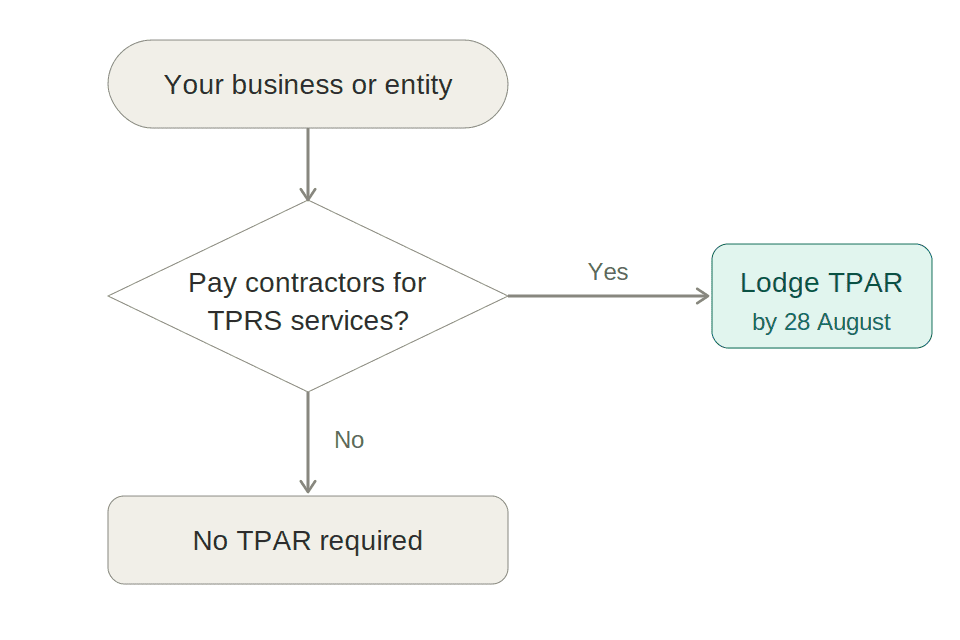
Figure 1: Do you need to lodge a TPAR?
What is a TPAR?
The taxable payments annual report is an annual report that certain businesses and government entities must lodge with the Australian Taxation Office (ATO) under the Taxable Payments Reporting System (TPRS). Its purpose is straightforward: to keep contractor payments on the tax radar. When businesses report what they’ve paid contractors, the ATO can cross-check that information against what those contractors declare in their own tax returns – helping to reduce underreporting and keep the system fair for everyone.
What Industries are Covered?
Not every business is required to lodge a taxable payments annual report. It depends on the services your business provides and pays contractors to deliver. The ATO requires a taxable payments annual report from businesses that pay contractors to provide the following TPRS services on their behalf:
- Building and construction services
- Cleaning services
- Courier services
- Road freight services
- Information technology (IT) services
- Security, investigation or surveillance services
Government entities also have taxable payments annual reporting obligations.
Importantly, you don’t have to operate exclusively in these industries to be caught by the rules. If your business provides a mix of services, you generally need to lodge a TPAR if payments you receive for TPRS services make up 10% or more of your GST turnover for the year. A common example: a business whose main activity is something else entirely, but which earns a meaningful side income from courier or cleaning work.
If your business operates in one of these sectors and pays contractors for those services, lodging a TPAR isn’t optional, it’s a legal requirement, and failure-to-lodge penalties can apply to overdue reports.
Who Counts as a Contractor?
The definition is broader than many people assume. Contractors aren’t just tradies on a building site. They include:
- Subcontractors
- Consultants
- Independent contractors
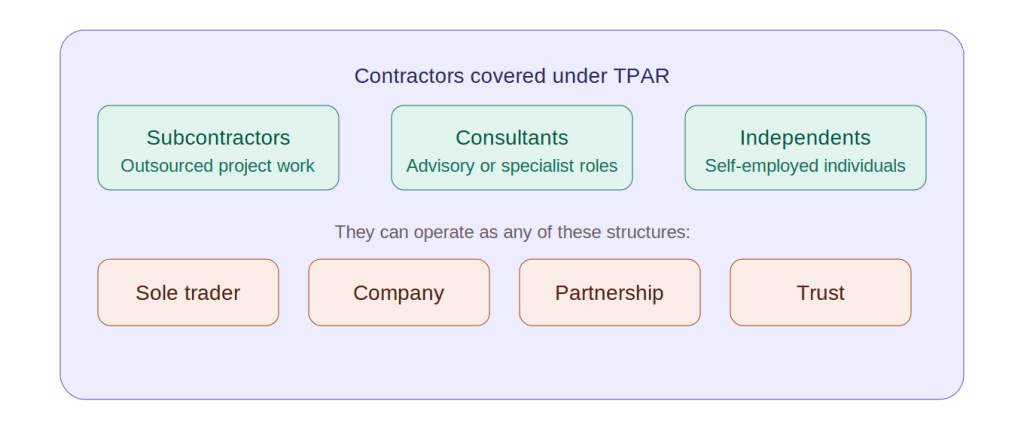
Figure 2: Contractor types and business structures covered by TPAR
And they can operate through a range of structures – as a sole trader (individual), a company, a partnership, or a trust. So, if you’re paying a freelance graphic designer, an IT consultant operating through their own company, or a subcontractor working through a trust, they may all fall under the TPAR umbrella.
What Information Do You Need to Report?
For each reportable contractor, your TPAR needs to include details that are generally found on the contractor’s invoices:
- Their Australian Business Number (ABN)
- Their name and address
- The gross amount you paid them during the financial year (including GST)
- The total GST included in those payments
Some payments are not reportable, for example, payments for materials only, payments to employees (these are reported through Single Touch Payroll instead), and invoices that remain unpaid as at 30 June (you only report payments actually made during the year).
Mark Your Calendar: 28 August
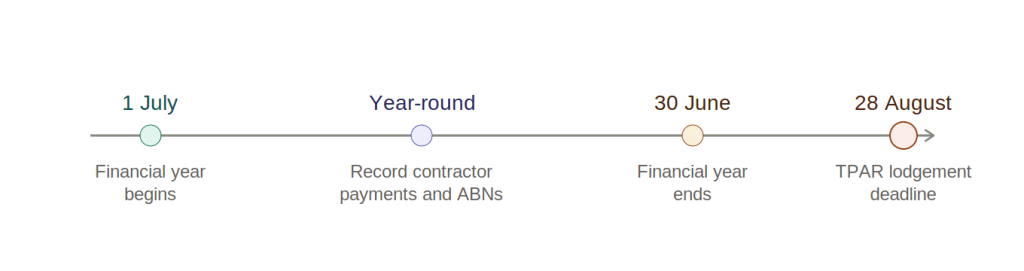
Figure 3: Taxable payments annual report annual lodgement timeline
The deadline is the same every year: 28 August, covering contractor payments made in the financial year just ended (1 July – 30 June). This gives businesses a couple of months after the end of the financial year to pull together their contractor payment records and get the report lodged on time.
TPARs are lodged electronically through SBR enabled accounting software, ATO Online services for business, or via your registered tax or BAS agent. If you’ve lodged a TPAR in the past but no longer need to, you can let the ATO know by submitting a TPAR non-lodgment advice.
Getting organised early is well worth it. Scrambling to track down contractor details, ABNs, and payment amounts at the last minute is stressful and leaves room for errors.
A Few Practical Tips
Keep records as you go. Rather than hunting through invoices in August, maintain a running record of contractor payments throughout the year – including the contractor’s name, ABN, address, and total amount paid (including GST).
Check whether your contractors are reportable. Not all contractor payments need to be included. Understanding which services fall under the TPRS rules and which payments are excluded will save you time and ensure accuracy.
Use your accounting software. Most modern accounting platforms have TPAR reporting built in. If yours does, set it up at the start of the financial year so the data populates automatically.
The bottom Line
The TPAR exists to create transparency around contractor payments in the Australian economy. For businesses, it’s simply part of doing things by the book. The good news is that with a bit of preparation and the right systems in place, meeting the 28 August deadline each year is very manageable.
If you’re unsure whether your business needs to lodge, or which payments are reportable, it’s worth checking the ATO’s guidance directly or speaking with your tax agent.
Frequently Asked Questions
Do I need to lodge a TPAR if I only used one contractor?
Yes, if that contractor provided a TPRS service, you still need to lodge. There is no minimum number of contractors before the requirement applies.
What if I miss the 28 August deadline?
You should lodge as soon as possible. The ATO may apply failure-to-lodge penalties, so acting quickly reduces your exposure.
Do I report the GST-inclusive or GST-exclusive amount?
You report the total amount paid including GST. The TPAR form has separate fields for the gross amount and the GST component.
What if my contractor is based overseas?
Generally, TPAR only applies to payments for services performed in Australia. However, if you’re unsure, check the ATO website or seek professional advice.
Can I lodge a TPAR through my accounting software?
Yes. Most major accounting platforms including Xero, MYOB, and QuickBooks support TPAR lodgement directly or via export to the ATO’s online services.
Need Help With Your TPAR?
Not sure if your business needs to lodge, or just want someone to handle it for you? The team at T3 can help. Whether it’s your first taxable payments annual report or you want to make sure everything is in order before the 28 August deadline, we’re here to make the process straightforward.
Get in touch with the team at T3 today.
This blog post is intended as general information only and does not constitute tax or legal advice. For advice specific to your circumstances, consult a registered tax professional or refer to the ATO website.